
THE CORE (LP) STYLE GUIDE
MODIFICATIONS & ADVANCEMENTS
Support clients through offering modifications and/or advancements:
Top ways to modify:
Body placement
Angle
Tension
Range of Motion
Mods: (If this is hurting your_______do __________)
Advancements: (If you aren’t feeling __(muscle engagement)_____ do __(correction)______)
Sometimes clients will not volunteer to take mods and advancements, as coaches it is our job to encourage them to do so which may require an off mic moment and a simple “try this and let me know how it feels”
This creates trust and helps our clients level up
BODY PLACEMENT
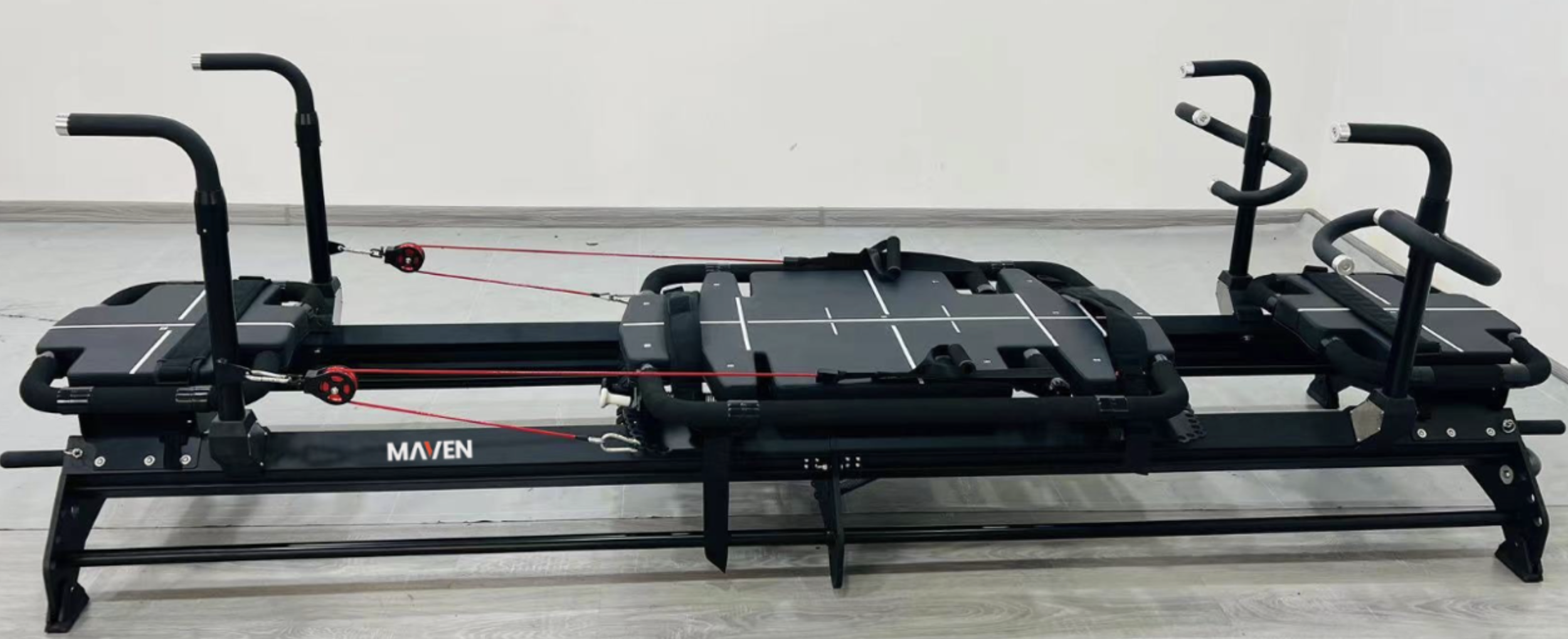
Remember those numbers and lines on the carriage? They mark hand and foot placement and help modify or intensify movements.
If you are on a light spring, moving your limbs further away from each other between the platform and carriage will intensify the motion, but walking the knees or feet closer to the upper body will help clients modify. For example, in Wheelbarrow, moving your knees farther back makes it harder; moving them closer to the front edge makes it easier. This is one of the great features of the modern reformer, there are endless ways to keep workouts fresh and challenging.
The opposite is true with heavy springs. If you are in a move and your limbs are closer together in a Skater on the edge of the platform and carriage, the tension will be heavier. But if you walk both feet wider to the platform and carriage strap, it is not as intense.
BODY ANGLE
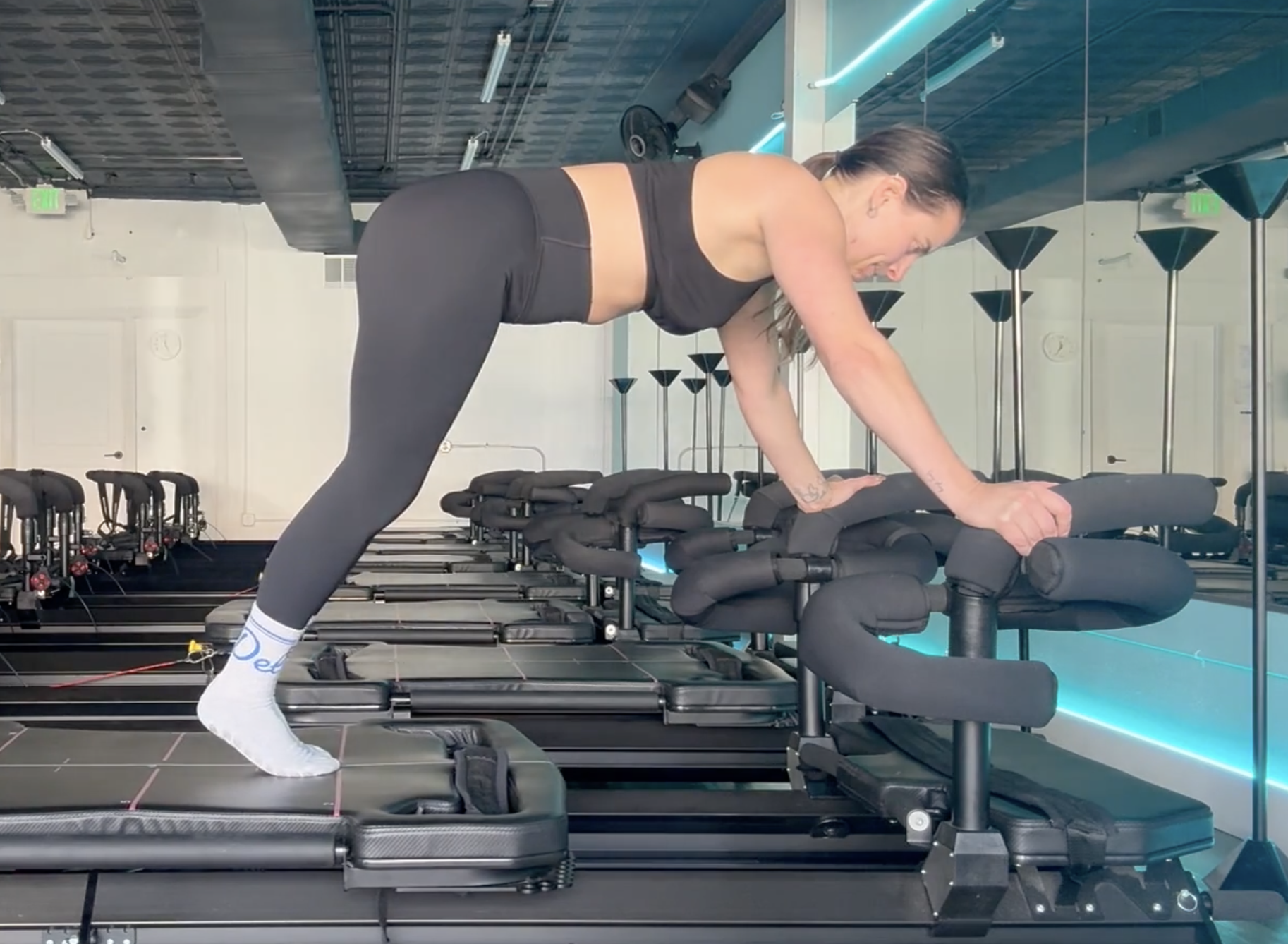
The angle of the body can greatly effect how challenging a move can be. Just like with geometry, in a physical system with tension, as the angle becomes shallower (closer to horizontal), the force (tension) increases. For instance, if we do a Plank to Pike on the forearms, the angle is more intense.
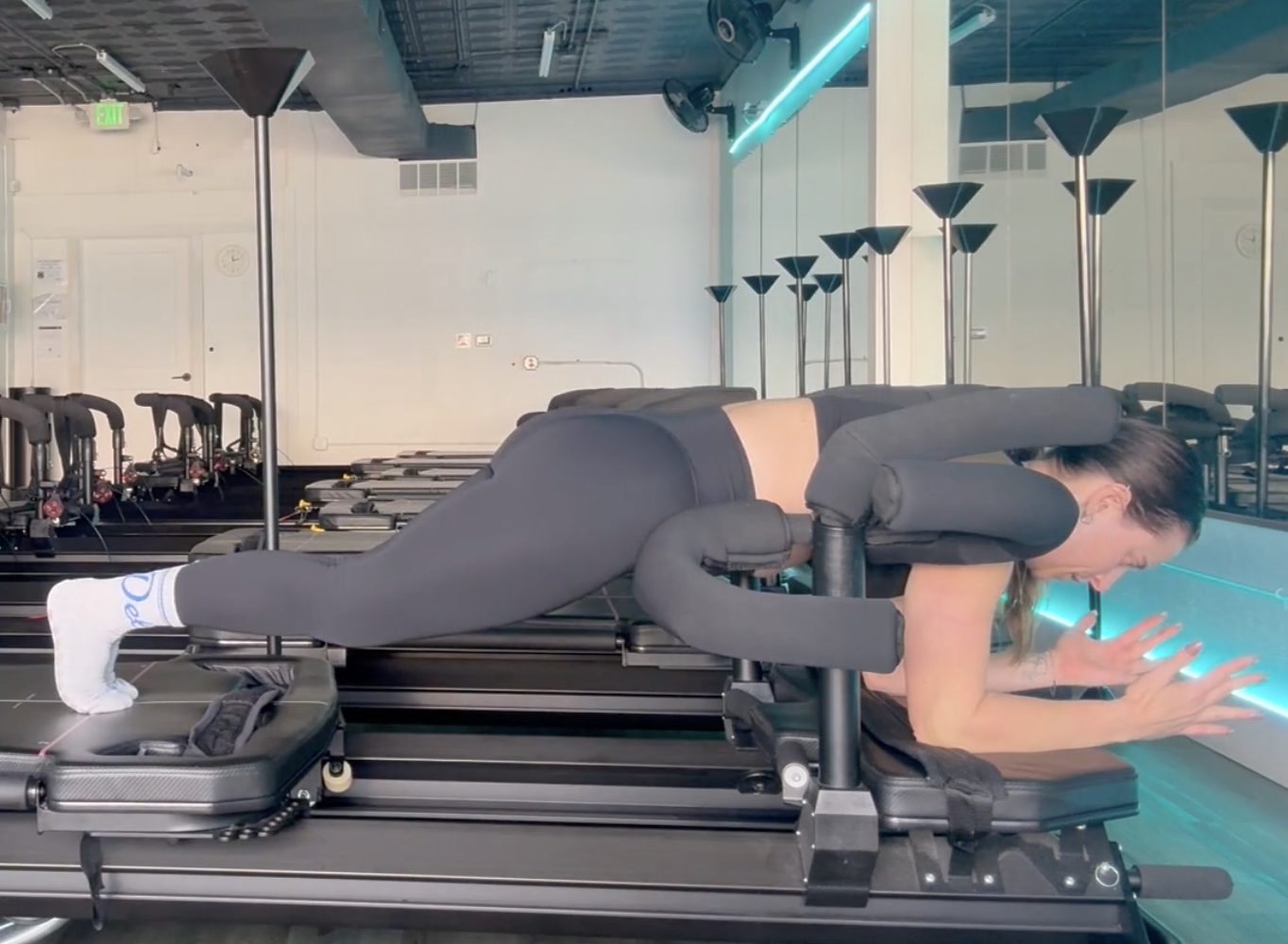
If we did Plank to Pike on the high bars the angle becomes bigger, giving us more space to move, and making it more manageable
MACHINE TENSION
The tension can make or break the move for many. If you are on the front of the machine doing a pulling exercise, more tension will help the client. If you are on the front of the machine doing a pressing exercise, more tension will make the move more intense.
On the back of the machine we are fighting against the spring tension. Therefore at the back of the machine, less tension will be more supportive and more tension will be more challenging.
Remember our example from the previous slides:
Front of the Machine
Pushing Movement (More Springs/Tension: Harder & Less Springs/Tension: Easier)
Like Skater or Super Lunge
Pulling Movement (More Springs/Tension: Easier & Less Springs/Tension: Harder)
Like Platform Lunge or Carriage Lunge
Back of the Machine
Pulling Movement (More Springs/Tension: Harder & Less Springs/Tension: Easier)
Like Back Platform Lunge or Front Carriage Lunge
RANGE OF MOTION
Range of motion is how far you you take a move. For some people they have big range of motion while others are working on flexibility and strength. Depending on the move always encourage small movements while the client can find their bearings.