
SPECIALTY GROUPS
Building strength
Monitoring exercise intensity & frequency
Injury prevention
Educating about technique
Focus on strengthening the deep abs and pelvis floor. Imagine the transverse abdominals as a sling to support the baby
Taper off twisting oblique work
Lying supine (on the back) in first trimester is ok, but this will change later on
Draw up the pelvic floor
When doing lower/upper body, encourage clients to hold the baby high and tight or hug the baby up to their heart using the abs.
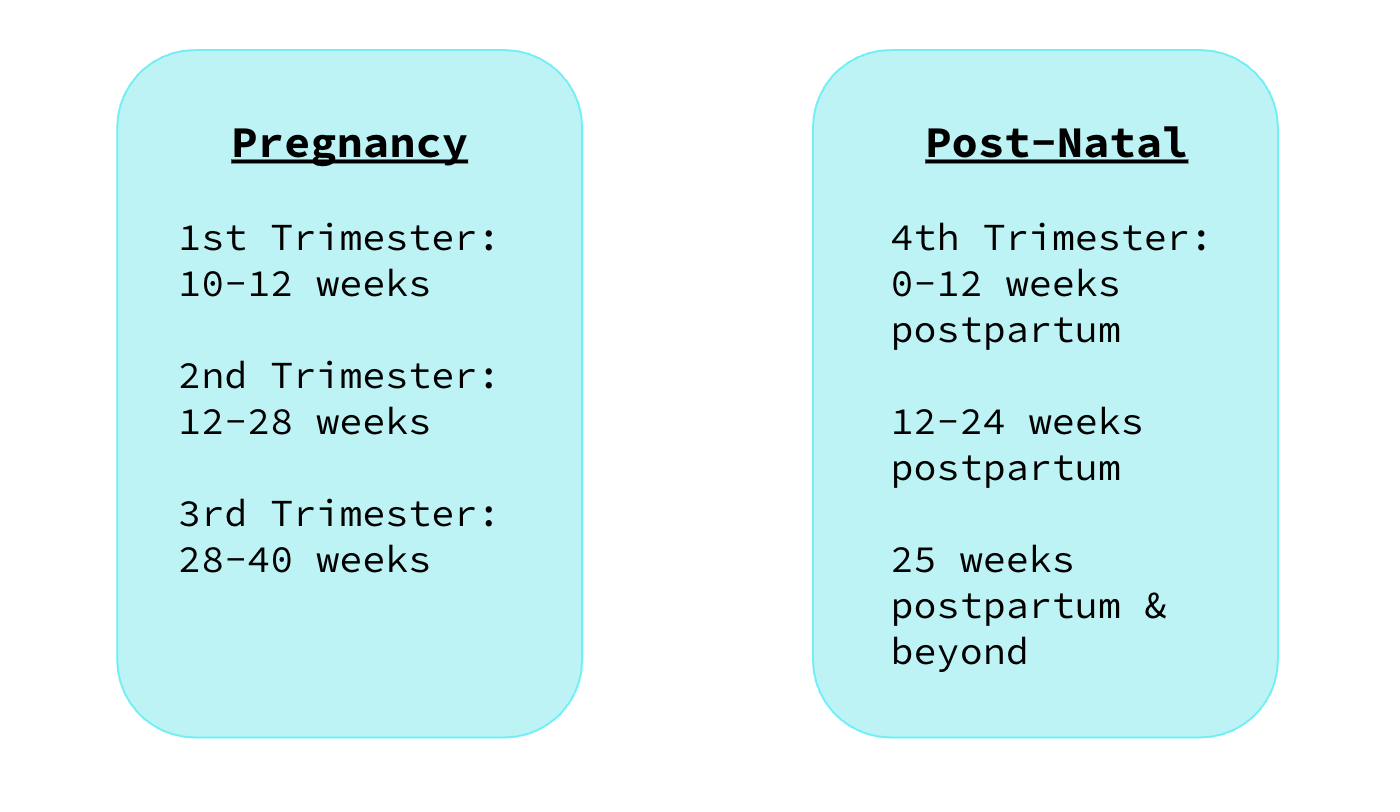
TRIMESTER 1
No prone (lying on stomach) exercises (ie.swimmer), careful being supine
Work on balance and posture training
The hormones have relaxed the joints and added weight is beginning to challenge the clients balance, so this is when you start modifying moves
Emphasize parts of the body to strengthen muscles that are overstretched and weak during pregnancy
Hamstrings - in relation to glute function
Abs
Back
Speak specifically to opening or stretch muscles that are shortened
Hip flexors
Lower back
Chest
TRIMESTER 2
TRIMESTER 3
By 36 weeks the uterus is 1000 times the original size, pushes against the diaphragm as much as an inch reducing the ability for the lungs to expand
Try using knuckles or forearms to get off wrists
MORE water breaks
Avoid knee and leg lifts // all supine positions
IF clients have lower back pain:
Avoid high heels
Bend at the knees to pick things up
Sit in chairs with good back support
Sleep in a side lying position
Use a low setting on a heating pad to help relax sore muscles
TRIMESTER 4
Women should only exercise if it makes them feel physically and psychology better. Resume gradually and once a medical professional/pelvic floor therapist has given the ok (Refer them to Pelvic Core PT for therapy).
Focus on movement and gentle return to more intense training
Women should not exercise if they have heavy bleeding, pain, or breast infections
Key Muscles to Strengthen
Pelvic tilts
Hollowing abs out
Chest stretches
Walking
Avoid crunches
Modify push-ups and planks
Most women will experience compromised abs after pregnancy. Strengthening the core will help avoid back pain and further injury
The transverse abdominis will be the most compromised
Goals for training
Focus on form and posture while strengthening deep abdominals
Avoid any crunches or twisting if signs of any ab seperation
Talk about mom’s FEELING better vs. “looking” better
Training for back pain:
Stretch hamstrings, glutes, and hip flexors
Training for the Pelvic Floor:
Avoid running, jogging, jumping
Strengthen
Do faster paced squats/lunges instead
12-24 Weeks (POSTPARTUM)
25 Weeks (Postpartum & beyond)
Monitor postpartum alignments
May focus on weight loss if that’s a goal, focus on completing goals
Celebrate achievements
Do not give medical advice but refer to pelvic floor therapists
Thrive Physical Therapy (insurance)
Pelvic Core PT (non-insurance) = 10% with referral from us (located in Berkley studio)
UNDERSTANDING THE POSTPARTUM CLIENT
Many clients have some level of tearing which can take up to 6 weeks to heal
Uterus will take 4-6 weeks to get back to normal size
Most C-sections do not cut through muscle instead the doctor cuts the skin and moves the muscle away to open the uterus and deliver the baby.
The aftereffects:
Relaxed joints
takes 5 months for new tissue to form to reduce joint stability
Weakened Pelvic Floor
Pelvic tilts help
Refer to PT if still not improved after 8 weeks
Compromised Abdominals
Shrinks 4-6 weeks after birth