MACHINE DEMO & MAINTENANCE
Springs vs. Free-Weights
Both spring-resistance and free-weights are extremely beneficial forms of exercise. They can give you:
some form of resistance
free range of motion
change the speed of movement
That being said, spring-resistance has a few things that you cannot get from weight lifting. Springs do not rely on gravity which allows you to move more freely through exercises. For example, when you twist with a dumbbell, you feel gravity pulling you down. When you twist with tension, you have a bit more range of motion even though you are under continuous tension. This alone allows spring-resistance to mimic everyday movements like twisting, reaching, and swinging.
Whites (Yellow) vs. Black (Red)
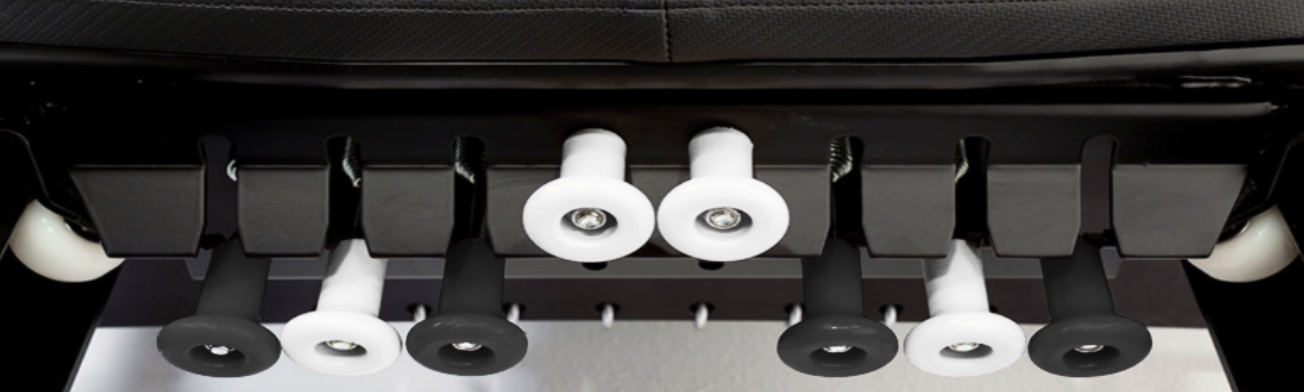
On the modern reformer carriage we have two types of springs; white (yellow) and black (red). When clients come in, they sometimes refer to the springs as “weight”. Well they would be partially correct. A white (yellow) spring is equal to 7 lbs when it is pressed all the way out and a black (red) spring is equal to about 40-50 lbs at full extension. These springs create pushing and pulling actions that make the modern reformer seem like three machines in one! This is also what makes the workout effective and parts of the machine sometimes more challenging than others. Below is a quick table to give you an idea of the logistics:
Front of the Machine
Pushing Movement (More Springs/Tension: Harder & Less Springs/Tension: Easier)
Like Skater or Super Lunge
Pulling Movement (More Springs/Tension: Easier & Less Springs/Tension: Harder)
Like Platform Lunge or Carriage Lunge
Back of the Machine
Pulling Movement (More Springs/Tension: Harder & Less Springs/Tension: Easier)
Like Back Platform Lunge or Front Carriage Lunge