
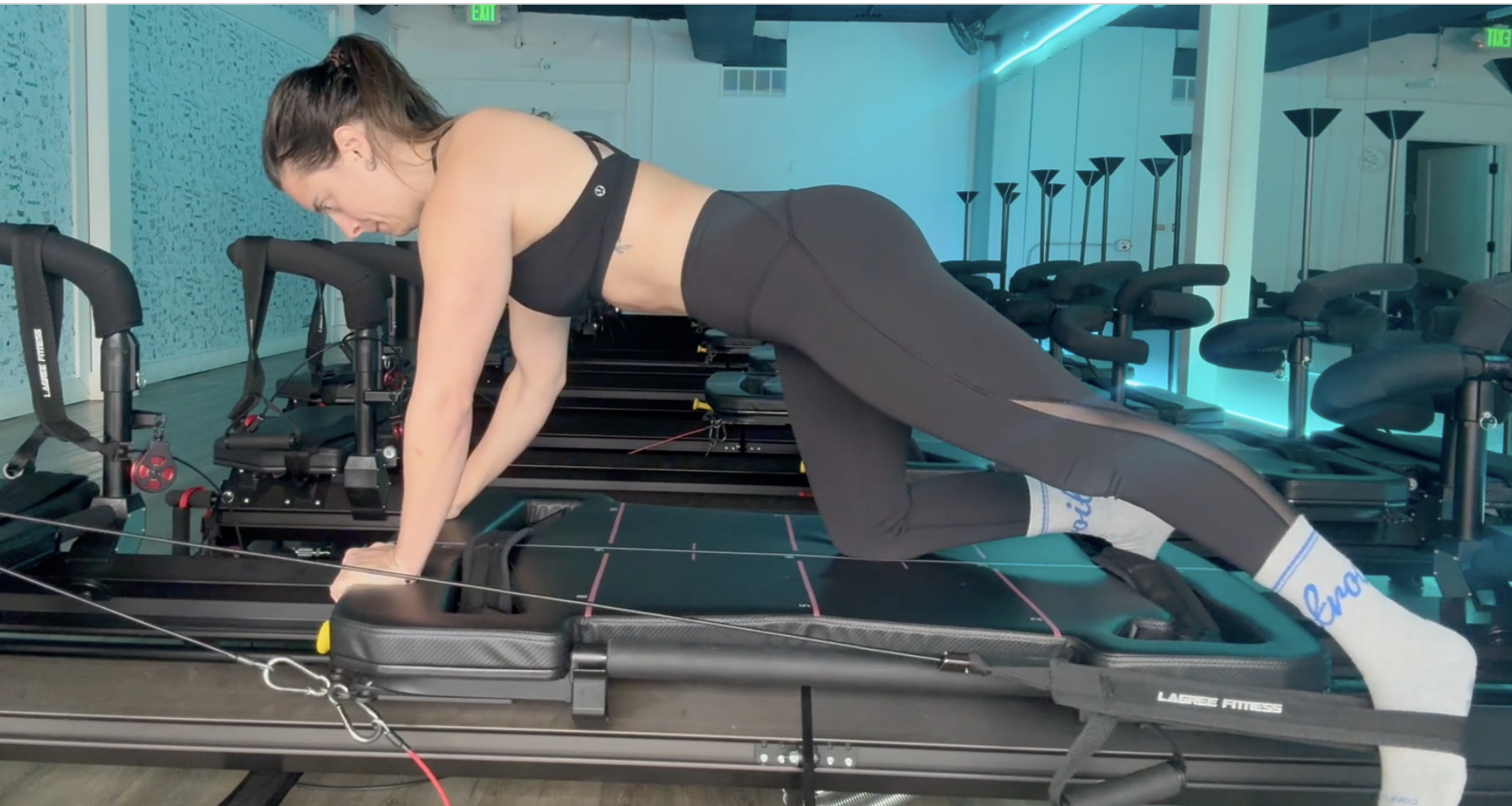
The Workout Everyone Thinks Is Pilates…Until They Take It
We talk a lot about the results our clients get at Core (LP).
We talk about getting stronger. Building muscle. Improving core strength. Supporting your running. Training without beating up your joints. Feeling better in your body.
But what actually…is the workout? Maybe you’ve looked at our machines and assume you know what you're getting.
It's a reformer, so it's Pilates. And if it's Pilates, it can't really be strength training. Right?
Wrong.
This is one of the biggest misconceptions I hear, and I think it's worth explaining exactly what we're doing when you walk into a Core (LP) session.
Because yes, it looks different from traditional strength training.
But different doesn't mean less effective.
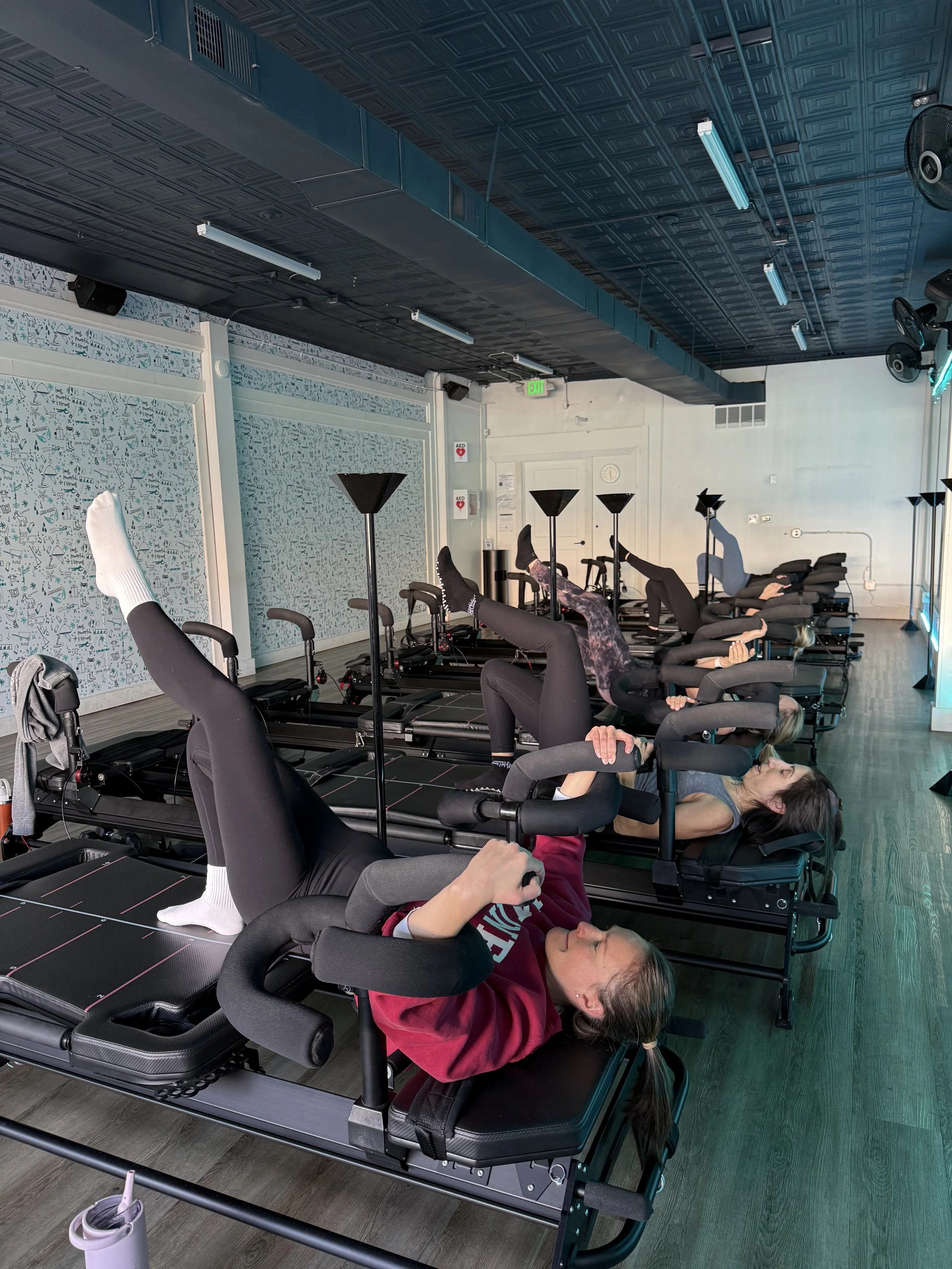
The Fitness Industry Has Sold Us A Lie About “Balance”
We talk about balance a lot in life. Work life balance, the balance between exercise and eating what our body needs. we hear this word “balance” a lot…yet balance can’t come first if your goal is change.
Work hard, but make time for yourself. Eat well, but enjoy your favorite foods. Train consistently, but don't overdo it. Get enough sleep, drink your water, spend time with your family, have a social life, answer your emails, take care of your house, make time for your friends...
Sounds great.
But here's the problem:
You can't have balance when you haven't built the foundation that makes balance possible.
I see this all the time with fitness.
Someone wants to "find balance" with exercise, but they haven't established any consistency yet. They want to know how to fit workouts into their life without feeling overwhelmed, but they haven't actually made taking care of themselves a priority.
So they keep trying to find the perfect schedule that somehow requires no sacrifice.
And that doesn't really exist.

You're Working This Hard in Class. Are You Actually Fueling It?
If you've been doing Pilates-inspired strength training for a while, you already know the workout is demanding.
You know the feeling when your legs start shaking halfway through a hold. You know what it feels like to move slowly when every part of you is begging to speed up. And you definitely know that "low impact" does not mean easy.
But here's something I see all the time in consultations and goal reviews. People are willing to put in the work in class while completely under-fueling the work they're asking their bodies to do.
And if you're consistently doing Pilates-inspired strength training, your nutrition matters.
Not because you need to eat perfectly. Not because you need to count every calorie. And definitely not because you need another set of rules around food.
You need to give your body enough energy and the right building blocks to actually perform, recover, and get stronger.

How Many Calories Does Reformer Pilates Burn?
Sometimes we get asked,
"How many calories does Reformer Pilates burn?"
And honestly...
I think it's the wrong question.
Not because calories don't matter.
But because calories are only one tiny piece of a much bigger picture.
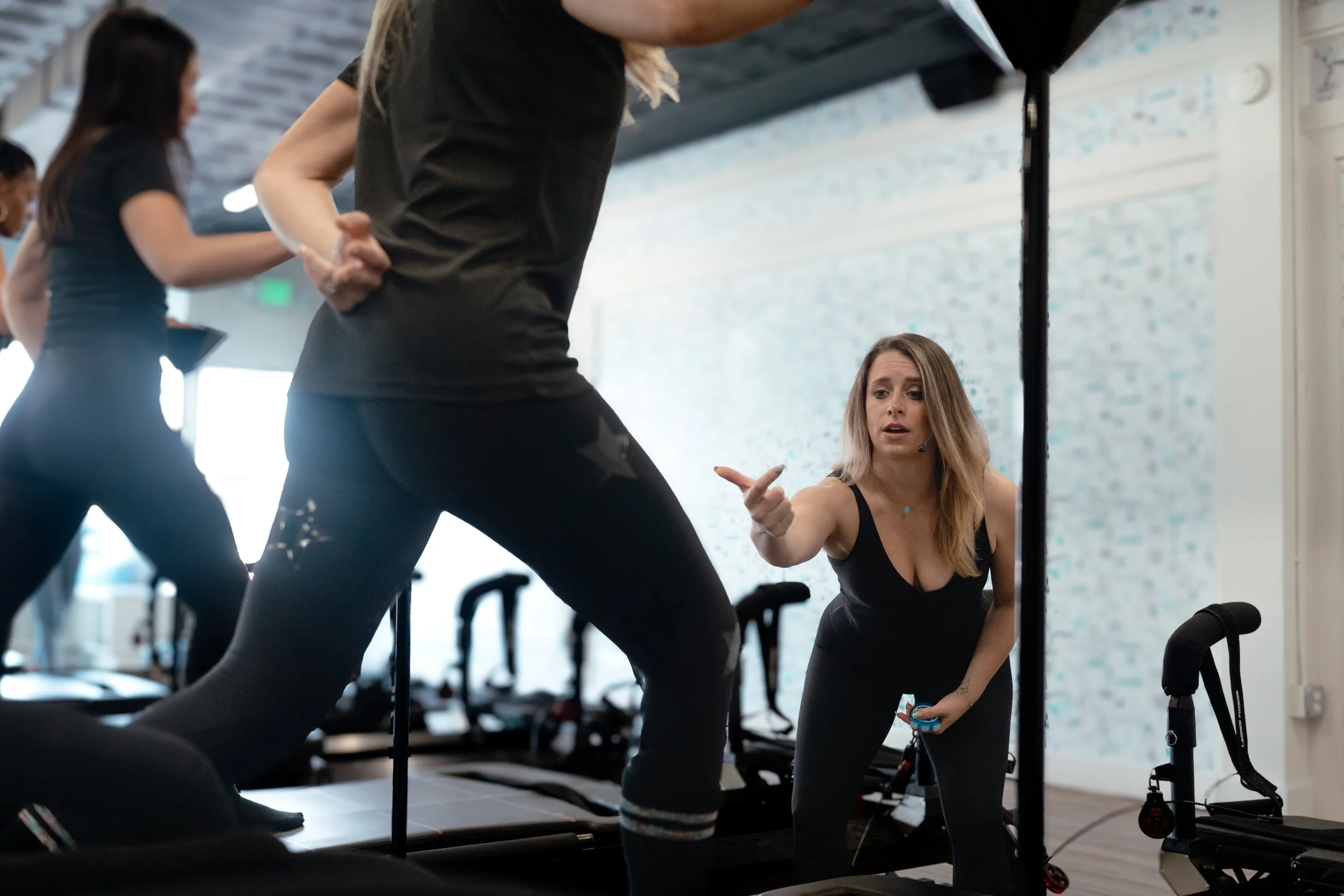
How Many Times Per Week Should I Do Pilates as a Beginner?
When I first started working out during my senior year at Michigan State, I thought the only way I'd see results was if I worked out every single day.
Then one of my friends convinced me to join an eight-week fitness challenge.
The commitment?
Just two classes a week.
I'll admit...I laughed.
Two workouts? That wasn't going to change anything.
Fast forward eight weeks, and not only had those two workouts become one of my favorite parts of the week, but they completely changed the way I looked at fitness.
Because I learned something I still tell clients today:
You don't need to do more. You need to do what you can actually sustain and then build from there.
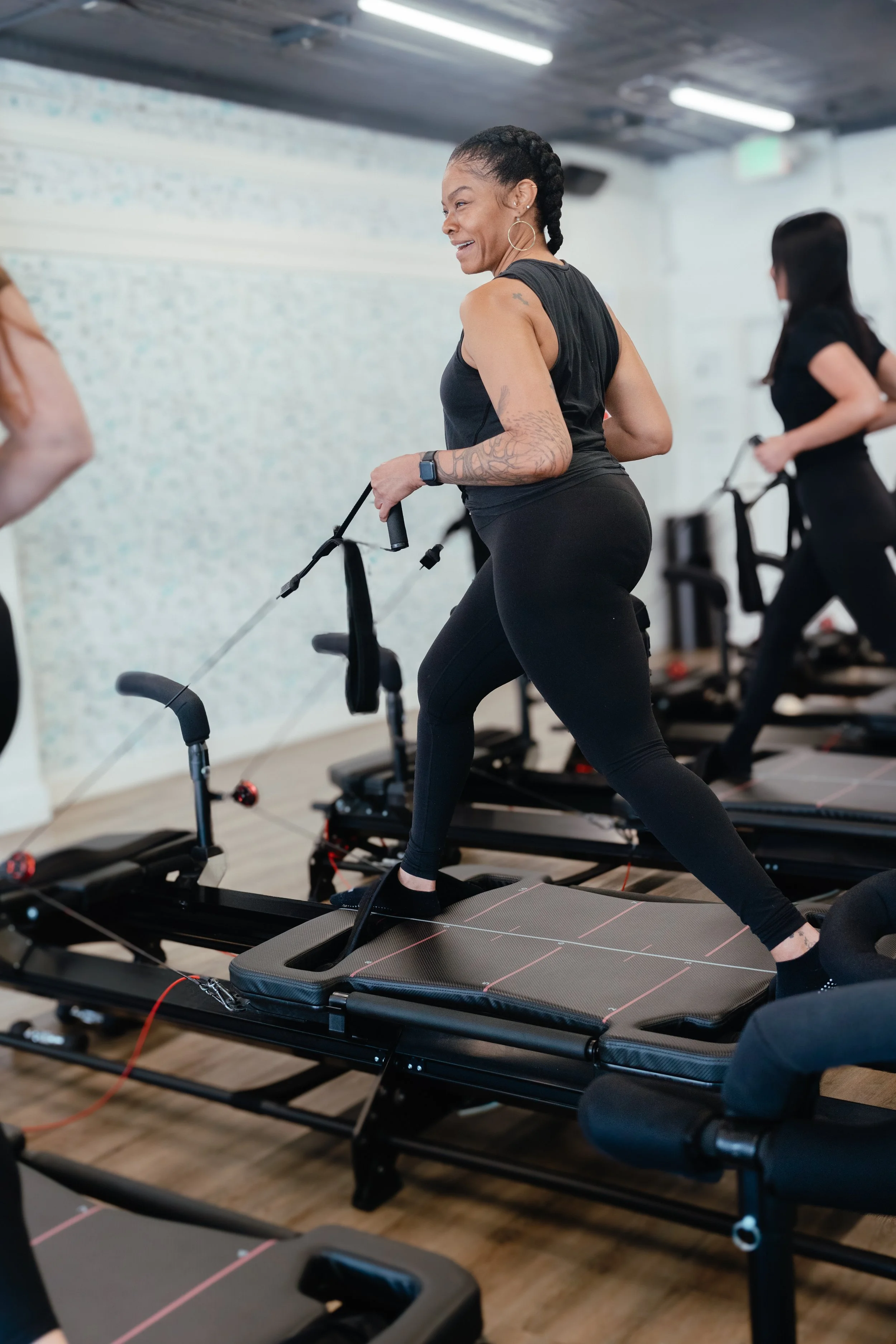
What the “Pilates Shake” Actually Means for Building Lean Muscle
If you've ever taken a Pilates-inspired strength class, you've probably experienced it.
Your legs start trembling.
Your arms begin shaking.
Your core feels like it's vibrating.
And somewhere around the halfway point of the movement, you start wondering:
"Is this normal?"
Or maybe you've heard someone say:
"If you're shaking, you're building muscle."
Then someone else chimes in:
"Nope. That's just a Pilates thing."
So...who's right?
The answer is somewhere in the middle.
How Often Should I Do Pilates as a Beginner?
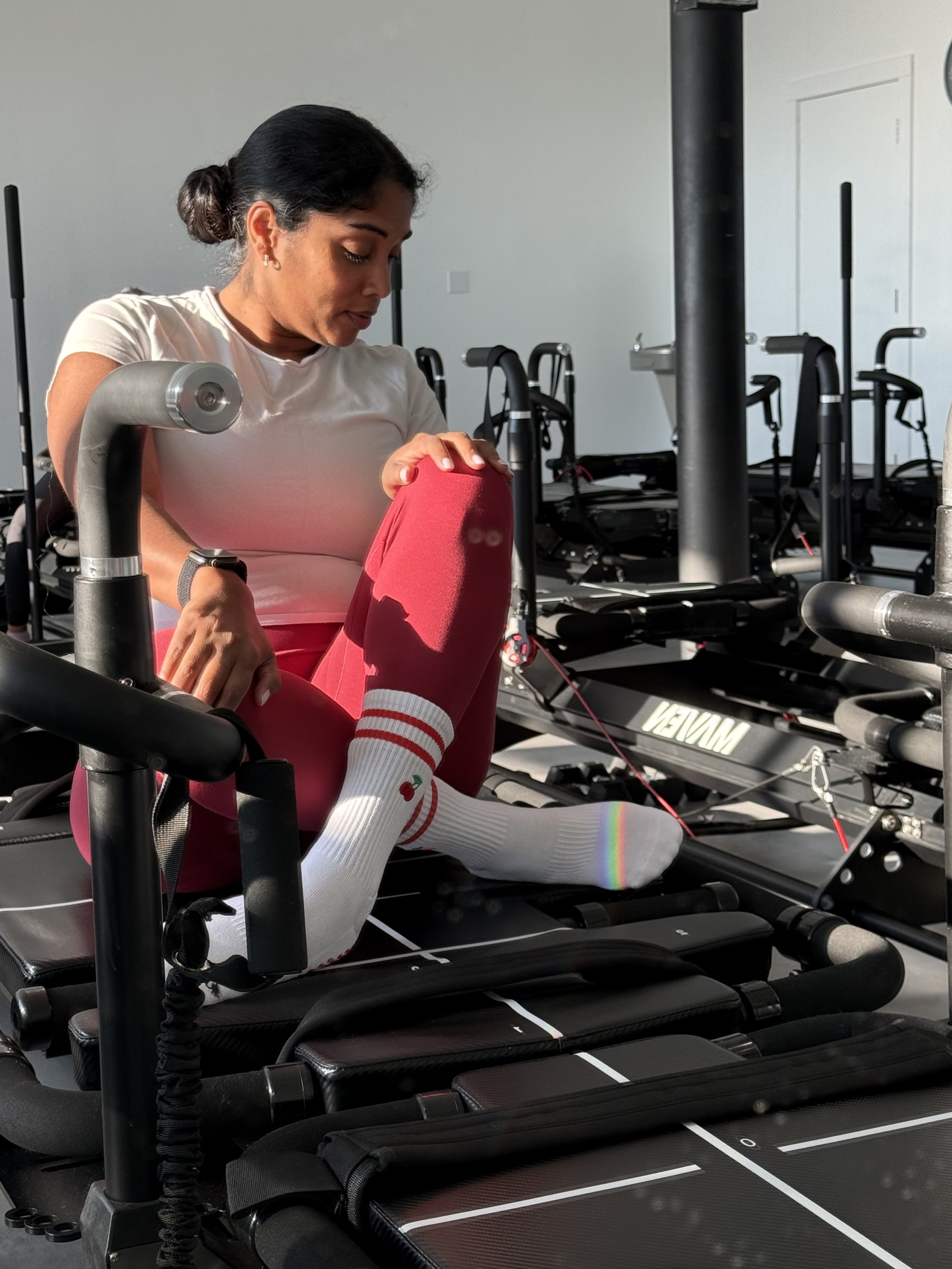
Starting something new always comes with questions and a learning curve, but honestly how often do we get the opportunity to be beginners as adults? When kickstarting your Pilates-inspired strength training journey, we typically hear these questions from potential clients.
How many classes should I take?
How often should I come?
When will I start seeing results?
The answer depends on your goals, your current fitness level, and your schedule—but the biggest factor is consistency.
It’s all about creating a routine your body can adapt to and your schedule can support.

How to Know Your Workout Rocked — Without Your Wearable
We know it too well. That feeling you get when you forget to close the ring after a solid workout. When your tracker says you burned 290 calories so you do a couple extra push-ups to reach 300 even though your chest and shoulders are fried. When your body is screaming for a break but you told yourself you have to reach 500 calories today to go out with your friends later.